
Air Compressor for Oxygen Generator: Full Compatibility Guide
An air compressor for oxygen generator applications is the first and most critical component in any PSA (Pressure Swing Adsorption) or VPSA (Vacuum Pressure Swing Adsorption) oxygen generation system. The performance, reliability, and purity output of the entire oxygen generator depends fundamentally on the quality of the compressed air supply delivered by this compressor.
Selecting the wrong air compressor for an oxygen generator leads to costly consequences: premature zeolite sieve bed degradation, reduced oxygen purity output, frequent unplanned shutdowns, and shortened overall system lifespan. Getting this selection right from the start is therefore one of the highest-value engineering decisions in any oxygen generation project.
This guide covers everything you need to know about selecting, sizing, and maintaining an air compressor for oxygen generator systems, from small medical PSA units producing 5 litres per minute to large industrial generators producing thousands of cubic metres per hour.
Further Reading: Looking for the best oil-free air compressors for industrial and medical applications? Visit our comprehensive guide at
oil-free-air-compressor.com for expert reviews, specifications, and buying advice on premium oil-free compressor technology.
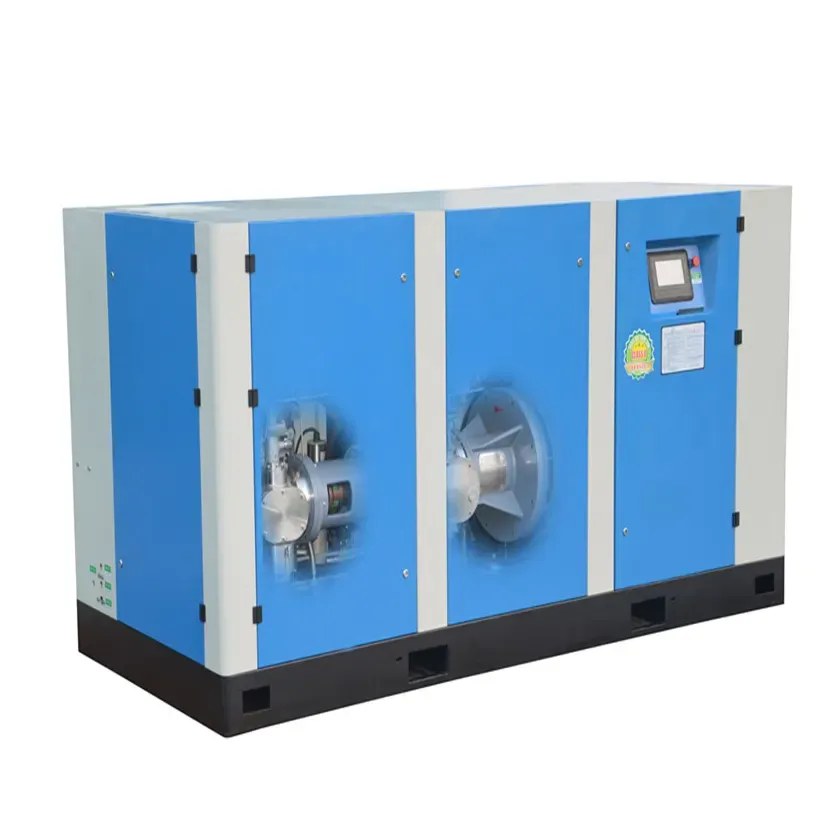
The air compressor is the foundation of every PSA oxygen generator system, determining overall performance and lifespan
Why the Air Compressor Is Critical to Oxygen Generator Performance
Oil Contamination
Even trace amounts of compressor oil entering the PSA beds permanently damage the zeolite molecular sieves, reducing their nitrogen adsorption capacity and causing purity to decline irreversibly.
Moisture Content
Water vapour in the compressed air competes with nitrogen for adsorption sites on the zeolite. Wet feed air shortens sieve bed life and reduces oxygen purity output. The compressed air must be dried to a pressure dew point of minus 40 degrees C or lower.
Stable Pressure
PSA oxygen generators operate best with stable, consistent feed air pressure. Pressure fluctuations cause uneven adsorption cycles, reducing oxygen purity and increasing sieve bed stress.
Temperature Control
Hot compressed air reduces zeolite adsorption efficiency. Aftercoolers and refrigerated dryers must reduce the compressed air temperature to below 40 degrees Celsius before it enters the PSA beds.
Adequate Flow Rate
The air compressor must supply sufficient flow to meet the oxygen generator demand at all times, including during peak demand periods. Size the compressor to deliver at least 20 percent above the generator nameplate air demand.
Vibration Isolation
Compressor vibration transmitted through pipework can affect sensitive flow control valves in the PSA system. Use flexible connections and anti-vibration mounts between compressor and generator pipework.
Choosing the Right Air Compressor Technology for Your Oxygen Generator
Oil-Free Reciprocating Piston Compressors
For small and medium PSA oxygen generators (up to approximately 50 Nm3/h oxygen output), oil-free reciprocating piston compressors are a reliable and cost-effective choice. They deliver the pressures needed (5 to 10 bar) with inherently oil-free compression. Their main limitations are pulsating flow (managed by a receiver vessel) and higher noise levels compared to rotary types.
Oil-Free Rotary Screw Compressors
For medium to large oxygen generators (50 to 1000 Nm3/h oxygen output), oil-free rotary screw compressors offer continuous, pulse-free compressed air with excellent energy efficiency. The higher capital cost compared to reciprocating piston compressors is offset by lower maintenance frequency and better part-load efficiency.
Oil-Free Scroll Compressors
For very small PSA oxygen generators used in medical homecare, dental offices, or laboratory settings, oil-free scroll compressors provide the quietest operation and very low vibration, making them suitable for installations adjacent to sensitive equipment or in quiet clinical environments.
Sizing an Air Compressor for Your Oxygen Generator
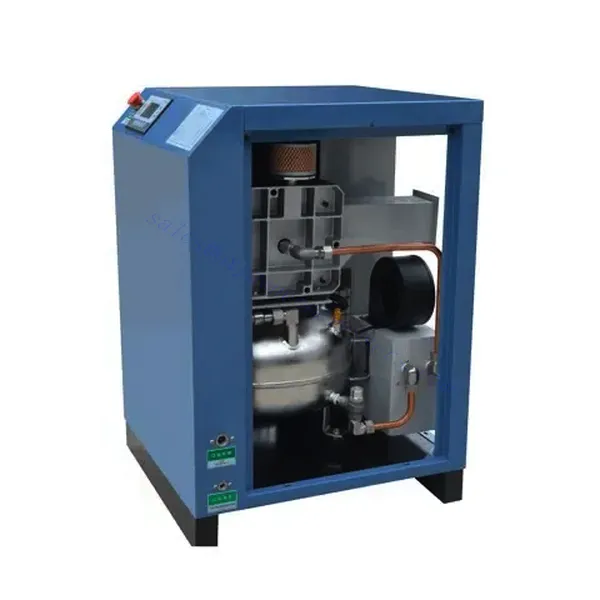
Correct sizing of the air compressor for your oxygen generator ensures stable purity and long sieve bed life
The sizing calculation for an air compressor for oxygen generator use follows these steps:
Determine Required Oxygen Output
Establish the maximum oxygen flow rate needed (in Nm3/h or LPM) and the target purity (typically 93 to 95 percent for PSA systems). This is your oxygen generator nameplate requirement.
Find the Air-to-Oxygen Ratio
PSA oxygen generators typically consume 4 to 6 Nm3 of compressed air per 1 Nm3 of oxygen produced at 93 percent purity. Obtain the exact ratio from your oxygen generator manufacturer for your specific model and purity target.
Calculate Base Air Demand
Multiply the required oxygen output by the air-to-oxygen ratio. If you need 20 Nm3/h of oxygen and the ratio is 5:1, your base air demand is 100 Nm3/h of compressed air.
Apply the Sizing Margin
Add a minimum 20 percent margin to the base air demand to account for compressor efficiency variations, altitude, high ambient temperature days, and future capacity growth. In this example, 100 x 1.2 equals 120 Nm3/h compressor rated capacity.
Confirm Pressure Requirement
Confirm the PSA generator inlet pressure specification from the manufacturer datasheet. Typical range is 5 to 10 bar g. The compressor rated pressure must be at or above this figure with adequate margin for pressure drop in dryers and filtration.
Verify Dew Point Specification
Confirm that the combined aftercooler, water separator, and dryer system achieves the pressure dew point required by the generator manufacturer, typically minus 40 degrees C pressure dew point at the generator inlet.
Filtration Requirements Between Compressor and Oxygen Generator
| Filter Type | Purpose | Specification | Change Interval |
|---|---|---|---|
| Pre-filter (coarse) | Remove water and bulk oil | Grade C or better, 1 mg/m3 oil | Every 4000 hours or annually |
| Fine coalescing filter | Remove oil aerosol | Grade H, 0.01 mg/m3 oil | Every 4000 hours or annually |
| Activated carbon filter | Adsorb oil vapour | Grade K, 0.003 mg/m3 THC | Every 4000 hours or annually |
| Refrigerated dryer | Remove bulk moisture | Pressure dew point 3 to 7 degrees C | Annual service and calibration |
| Desiccant dryer | Deep drying for sieve protection | Pressure dew point minus 40 C | Desiccant change every 2 to 5 years |
Frequently Asked Questions
Get Expert Advice Today
Send us your specifications and receive a tailored recommendation within 24 hours.