
Oxygen Plant Compressor: PSA and VPSA System Integration
An oxygen plant compressor is the central mechanical component of any on-site oxygen generation plant, whether based on Pressure Swing Adsorption (PSA), Vacuum Pressure Swing Adsorption (VPSA), or Vacuum Swing Adsorption (VSA) technology. The compressor determines the plant capacity, efficiency, purity output, and operating cost more than any other single component.
Understanding how the air compressor for oxygen plant integrates with the broader PSA or VPSA system, what specifications govern its selection, and how its operation affects sieve bed performance and oxygen purity is essential knowledge for plant engineers, procurement teams, and facility managers responsible for on-site oxygen generation.
Further Reading: Looking for the best oil-free air compressors for industrial and medical applications? Visit our comprehensive guide at
oil-free-air-compressor.com for expert reviews, specifications, and buying advice on premium oil-free compressor technology.
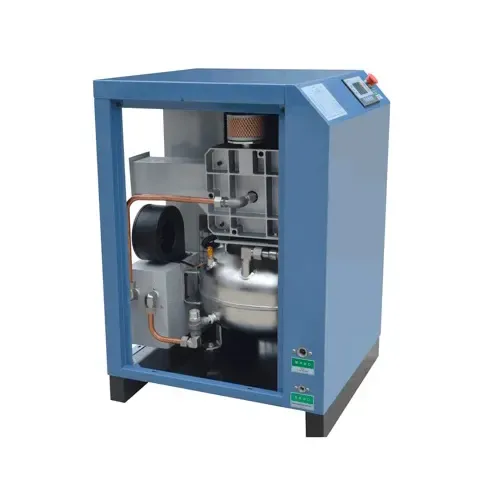
The oxygen plant compressor integrates with PSA and VPSA systems to determine capacity, efficiency, and purity output
PSA vs VPSA: Different Compressor Roles
PSA Feed Air Compressor
In a standard PSA plant, the compressor provides pressurised air (4 to 10 bar) to drive nitrogen adsorption in the zeolite beds. This is the dominant power consumer and determines plant throughput. Oil-free design is mandatory.
VPSA Feed Compressor
VPSA plants use a lower feed air pressure (typically 1.3 to 1.5 bar) combined with vacuum regeneration. The feed compressor is smaller and lower pressure than a PSA equivalent, reducing capital cost.
VPSA Vacuum Pump
The vacuum pump in a VPSA system draws the sieve bed pressure down to 0.25 to 0.40 bar absolute during regeneration. This deeper regeneration step improves oxygen recovery and purity, but adds a second major machine to the plant.
Product Oxygen Booster
After the PSA beds produce oxygen at 5 to 8 bar, a separate product oxygen booster compressor may raise the pressure to pipeline distribution pressure or cylinder fill pressure if required.
Instrument Air Compressor
PSA and VPSA plants use pneumatically actuated switching valves that require clean, dry instrument air. A separate small instrument air compressor serves this need, independent of the process feed air system.
Cooling Water Pump
Water-cooled compressors require a cooling water circuit pump. While not itself a gas compressor, the cooling system is a critical auxiliary that affects compressor performance and reliability.
Integrating the Compressor with the PSA Oxygen Plant
Inlet Air Treatment Train
Before the feed air reaches the PSA beds, it must pass through the complete treatment train: aftercooler to remove heat of compression, moisture separator to remove bulk liquid water, refrigerated dryer to achieve plus 3 degrees C pressure dew point, coalescing filters to remove oil aerosol, and activated carbon filter to remove oil vapour. All treatment equipment must be sized for the compressor rated flow.
Buffer Vessel Sizing
A correctly sized buffer vessel between the compressor and the PSA plant smooths the cyclic pressure variation from the alternating adsorption beds. Without adequate buffering, the compressor pressure control system hunts, causing instability in the PSA cycle timing. A buffer volume equal to 15 to 30 times the switching valve flow rate per cycle is a common design starting point.
Control System Integration
The oxygen plant compressor control system must integrate with the PSA plant PLC. The compressor start-stop or speed control responds to the plant oxygen demand signal, and the plant receives compressor status information (running, fault, discharge pressure) for system coordination and alarm management.
Standby Compressor Configuration
For continuous-duty oxygen plants, a standby compressor is required for maintenance without plant shutdown. Common configurations are 2 x 100 percent capacity (one duty, one standby) or 3 x 50 percent capacity (two duty, one standby). Automatic changeover to the standby compressor must be confirmed and tested during commissioning.
Performance Baseline Testing
After commissioning, measure and record the compressor specific power consumption (kW per Nm3/h of oxygen produced), delivery pressure, dew point at the plant inlet, and oxygen purity output at nominal load. These baseline figures provide the reference for future performance monitoring and early detection of degradation.
Compressor Selection for Different Plant Sizes
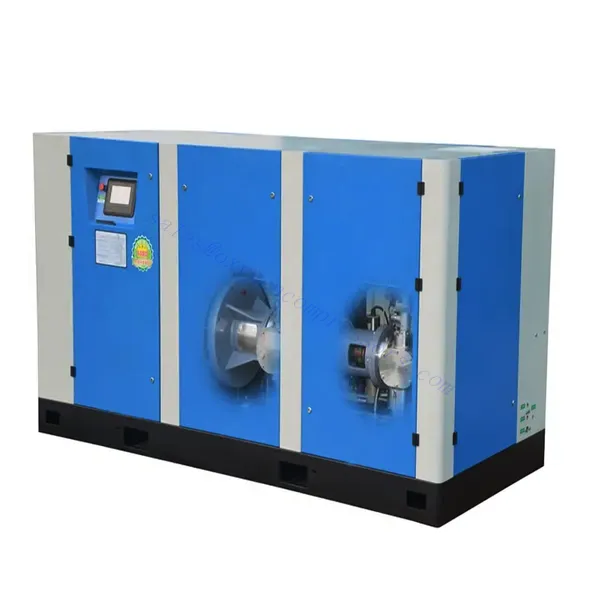
The right compressor technology depends on the oxygen plant scale and required operating profile
| Plant Scale | O2 Output | Recommended Feed Compressor | Typical Power |
|---|---|---|---|
| Micro PSA | 0.5 to 5 Nm3/h | Oil-free piston or scroll, single phase | 0.5 to 3 kW |
| Small PSA | 5 to 50 Nm3/h | Oil-free piston, 2-stage, 3-phase | 3 to 22 kW |
| Medium PSA | 50 to 200 Nm3/h | Oil-free rotary screw | 22 to 90 kW |
| Large PSA | 200 to 1000 Nm3/h | Oil-free rotary screw, multiple units | 90 to 400 kW |
| Industrial VPSA | 500 to 5000 Nm3/h | Oil-free screw plus vacuum pump | 200 to 2000 kW |
| Very large VPSA/VSA | Above 5000 Nm3/h | Centrifugal with vacuum turbo | 2 to 20 MW |
Frequently Asked Questions
Ready to Find the Right Oxygen Compressor?
Our engineering team is ready to help you select the ideal unit for your application.