
Understanding the Core Distinction
The question of oxygen compressor vs concentrator arises regularly among patients, clinicians, and industrial procurement teams. While both devices ultimately deliver oxygen-enriched gas to the end user, they work on entirely different principles, serve different purposes, and involve different cost structures, maintenance requirements, and operational considerations.
An oxygen compressor does not produce oxygen. It takes an existing oxygen source, such as liquid oxygen from a tank, cylinder oxygen, or the output of a PSA concentrator, and increases its pressure so it can be stored in high-pressure vessels or transported through pipelines over long distances.
An oxygen concentrator, by contrast, produces oxygen from ambient air. It draws in room air, passes it through molecular sieve beds or membrane filters, removes nitrogen, and delivers an oxygen-enriched stream directly to the user without any pre-existing oxygen source.
Further Reading: Looking for the best oil-free air compressors for industrial and medical applications? Visit our comprehensive guide at
oil-free-air-compressor.com for expert reviews, specifications, and buying advice on premium oil-free compressor technology.
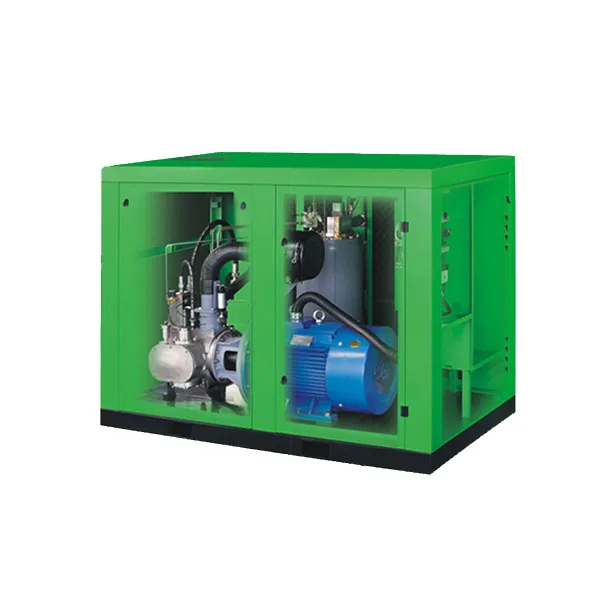
Understanding the difference between oxygen compressors and concentrators is key to correct equipment selection
Oxygen Concentrator: How It Generates Oxygen
The oxygen concentrator air compressor relationship is often misunderstood. A concentrator contains an internal compressor as one of its components, but the two are not the same device. Here is how a concentrator generates oxygen:
Ambient Air Intake
Room air, which is approximately 21 percent oxygen and 78 percent nitrogen, is drawn in through an intake filter to remove dust and particulates.
Internal Air Compression
An internal compressor (usually a small oil-free reciprocating or rotary device) raises the air pressure to typically 1 to 2 bar, sufficient to drive adsorption.
Zeolite Adsorption Cycle
The compressed air enters a bed of zeolite molecular sieves. Zeolite preferentially adsorbs nitrogen at higher pressures, allowing oxygen and argon (approximately 4 percent) to pass through.
Oxygen Collection and Delivery
The oxygen-enriched gas, typically 90 to 95.5 percent purity, collects in a product tank and is delivered to the patient or process outlet at low pressure.
Sieve Bed Regeneration
When one zeolite bed saturates, the system switches to a parallel bed while the first desorbs nitrogen by depressurising to atmosphere, ready for the next cycle.
Head-to-Head Comparison
| Feature | Oxygen Concentrator | Oxygen Compressor |
|---|---|---|
| Oxygen Source | Produces from room air | Requires existing oxygen supply |
| Typical Purity | 90 to 95.5% | Passes through whatever is supplied (95 to 99.5%) |
| Output Pressure | 0.4 to 2 bar (low) | Up to 300 bar (high pressure storage) |
| Running Cost | Electricity only | Electricity plus feed gas cost |
| Upfront Cost | Lower for small units | Variable, higher for large systems |
| Maintenance | Filter changes, sieve replacement every 5 to 10 years | Valve overhauls, piston ring changes |
| Mobility | Portable models available | Generally fixed or semi-fixed |
| Best For | Continuous low-pressure delivery | Cylinder filling, high-pressure distribution |
| Grid Dependency | Yes (mains powered) | Yes (mains powered) |
| Backup Required | Cylinders for power outage | Concentrator or liquid supply for feed gas |
When to Choose a Concentrator
Choose an oxygen concentrator in these scenarios:
- Continuous therapeutic oxygen delivery to patients in home, clinic, or hospital settings where 90 to 95 percent purity is medically acceptable.
- Remote or rural locations where cylinder logistics are challenging and a reliable electricity supply is available.
- Industrial applications requiring moderate-purity oxygen for combustion enhancement, water treatment, or aquaculture, where 90 to 95 percent purity is sufficient.
- Cost-sensitive applications where the ongoing cylinder or liquid oxygen supply costs of a compressor-based system would be prohibitive.
- Applications where a low-pressure, continuous oxygen stream is needed rather than high-pressure stored gas.
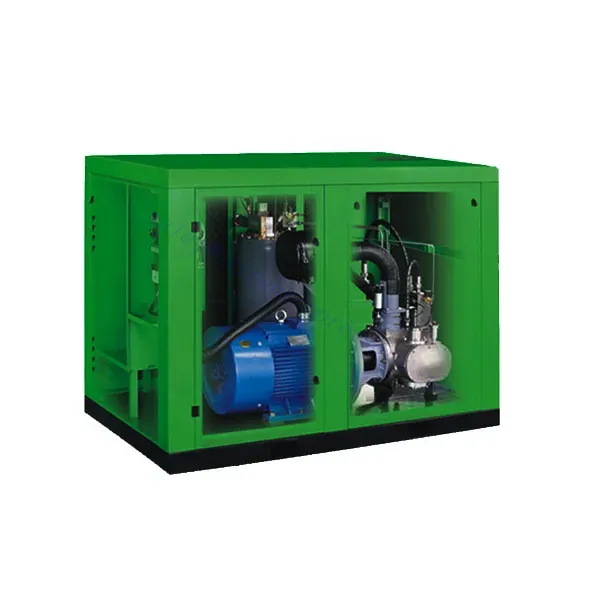
Concentrators generate oxygen continuously while compressors store and pressurise existing oxygen supplies
When to Choose an Oxygen Compressor
Choose an oxygen compressor when:
- You need to fill portable oxygen cylinders from a stationary concentrator for patients who need mobility (HomeFill applications).
- Your application requires oxygen stored at pressures above 10 bar for transport, pipeline injection, or industrial processes.
- You operate a large-scale PSA oxygen plant where the concentrator output must be boosted to pipeline pressure.
- Very high purity oxygen (99 percent or above) is required, necessitating a liquid oxygen or electrolysis source that then must be compressed for distribution.
- You are operating a medical gas pipeline system where central compressor-concentrator plants feed building distribution networks.
Combined Systems: The Complete Oxygen Supply Chain
Many modern oxygen supply installations combine both technologies. A PSA concentrator generates oxygen continuously from room air. An oxygen compressor then takes this concentrated output and raises it to cylinder-fill pressure, allowing users to have both continuous low-pressure supply and a stockpile of portable cylinders available at all times.
This integrated approach, called a compressor-concentrator combination or oxygen filling station, is increasingly popular in hospitals seeking to reduce liquid oxygen dependency, in remote industrial camps needing self-sufficiency, and in small oxygen production businesses serving local markets.
Understanding whether you need the generation capability of a concentrator, the pressure amplification of a compressor, or both is the starting point for any oxygen supply project. Our team at oxygencompressors.com can help you design the right system for your specific flow rate, purity, and pressure requirements.
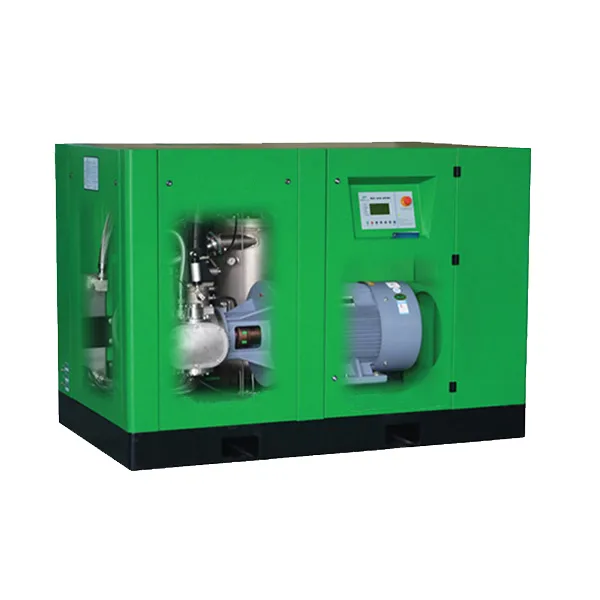
Industrial-scale oxygen systems often combine concentrator generation with compressor-based storage and distribution
Frequently Asked Questions
Get Expert Advice Today
Send us your specifications and receive a tailored recommendation within 24 hours.