
Liquid Oxygen Compressor: Understanding the Technology
A liquid oxygen compressor is a specialised machine that operates in a fundamentally different regime from conventional gas-phase oxygen compressors. Rather than compressing gaseous oxygen, these systems pressurise oxygen while it remains in its liquid state, which requires dramatically different design principles, materials, and safety approaches.
Liquid oxygen (LOX) exists at temperatures below minus 183 degrees Celsius at atmospheric pressure. Handling and pressurising a cryogenic liquid that is also a powerful oxidiser requires engineering solutions found nowhere else in the compressor industry. Understanding how liquid oxygen compressors work, where they are used, and how they differ from gas-phase units is essential for anyone involved in large-scale oxygen supply chains.
Further Reading: Looking for the best oil-free air compressors for industrial and medical applications? Visit our comprehensive guide at
oil-free-air-compressor.com for expert reviews, specifications, and buying advice on premium oil-free compressor technology.
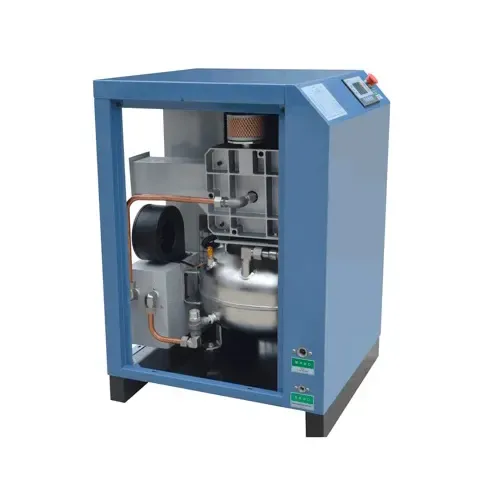
Liquid oxygen compressors operate at cryogenic temperatures and require specialised materials and safety systems
How Liquid Oxygen Compressors Differ from Gas-Phase Units
The core difference between a liquid oxygen compressor and a conventional gas oxygen compressor is the physical state of the process fluid. Compressing a liquid requires far less energy than compressing the equivalent mass of gas to the same pressure, because liquids are nearly incompressible. Instead of the multi-stage gas compression with intercooling that defines gas-phase oxygen compressors, liquid oxygen compression uses a high-pressure pump to raise the pressure of the liquid.
Once pressurised to the target pressure, the liquid oxygen passes through a vaporiser, converting it back to gas at high pressure. This liquid compression and vaporisation process, known as the liquid pump cycle or liquid phase compression cycle, is central to how modern air separation units (ASUs) deliver high-pressure gaseous oxygen more efficiently than traditional gas compression cycles.
Cryogenic Pump Technology
Liquid oxygen compression uses cryogenic centrifugal or positive-displacement pumps designed for temperatures down to minus 196 degrees Celsius and constructed from austenitic stainless steel, Inconel, or aluminium alloys that retain toughness at cryogenic temperatures.
Internal Compression Cycle
In an air separation unit, the internal compression cycle pumps liquid oxygen from the cold box, vaporises it against the incoming air stream in a heat exchanger, and delivers high-pressure gaseous oxygen. This avoids a separate gas compressor entirely.
Vaporiser Design
The vaporiser exchanges heat between the liquid oxygen stream and a warmer fluid (incoming process air or utility steam) to convert the pressurised liquid to gas without adding contamination. Aluminium plate-fin heat exchangers are common in large ASU internal compression systems.
Purity Preservation
Because the oxygen never enters the compression chamber of a mechanical gas compressor, there is no risk of piston ring wear particles or compressor materials contaminating the gas stream. Liquid compression cycles naturally preserve the very high purity of cryogenically produced oxygen.
Applications for Liquid Oxygen Compression
Air Separation Units (ASUs)
The largest application for liquid oxygen compressors is within air separation units. Large ASUs produce liquid oxygen at very high purity (99.5 to 99.999 percent) and then use internal compression cycles to deliver product oxygen to customers at pressures from 5 to 100 bar. This approach is more energy-efficient at large scale than recompressing the gas after separation.
Liquid Oxygen Storage and Transfer
Hospitals, industrial gas suppliers, and rocket propellant facilities store liquid oxygen in cryogenic vessels and use liquid oxygen transfer pumps to move product between vessels or to fill road tankers. These cryogenic liquid transfer pumps are sometimes referred to informally as liquid oxygen compressors.
Aerospace and Defence
Rocket propulsion uses liquid oxygen as the oxidiser component. Launch facility liquid oxygen systems include high-pressure cryogenic pumps that can deliver very large flows of LOX to propellant loading systems and rocket engine test stands at pressures up to several hundred bar in the most demanding applications.
Liquid Oxygen vs Gas Oxygen Compression: Which Is Better?
| Factor | Liquid Oxygen Compression | Gas Phase Oxygen Compression |
|---|---|---|
| Energy Efficiency | More efficient at high pressure ratios | Less efficient at very high pressures |
| Purity | Maintains 99.5%+ naturally | Requires oil-free tech to preserve purity |
| Scale | Most effective at very large scale | Effective from small to large scale |
| Flexibility | Less flexible, requires cryogenic infrastructure | Highly flexible, can be installed anywhere |
| Capital Cost | High (cryogenic systems) | Lower for equivalent capacity |
| Operating Temp | Minus 183 C (cryogenic) | Ambient to 40 C |
| Maintenance | Specialist cryogenic expertise required | Standard industrial maintenance |
| Best For | Large industrial gas plants, ASUs | All other oxygen compression applications |
For most applications outside of large air separation plants, gas-phase oxygen compressors remain the practical and economical choice. Liquid oxygen compression is a specialist technology most relevant to industrial gas producers and large-scale oxygen distribution infrastructure.
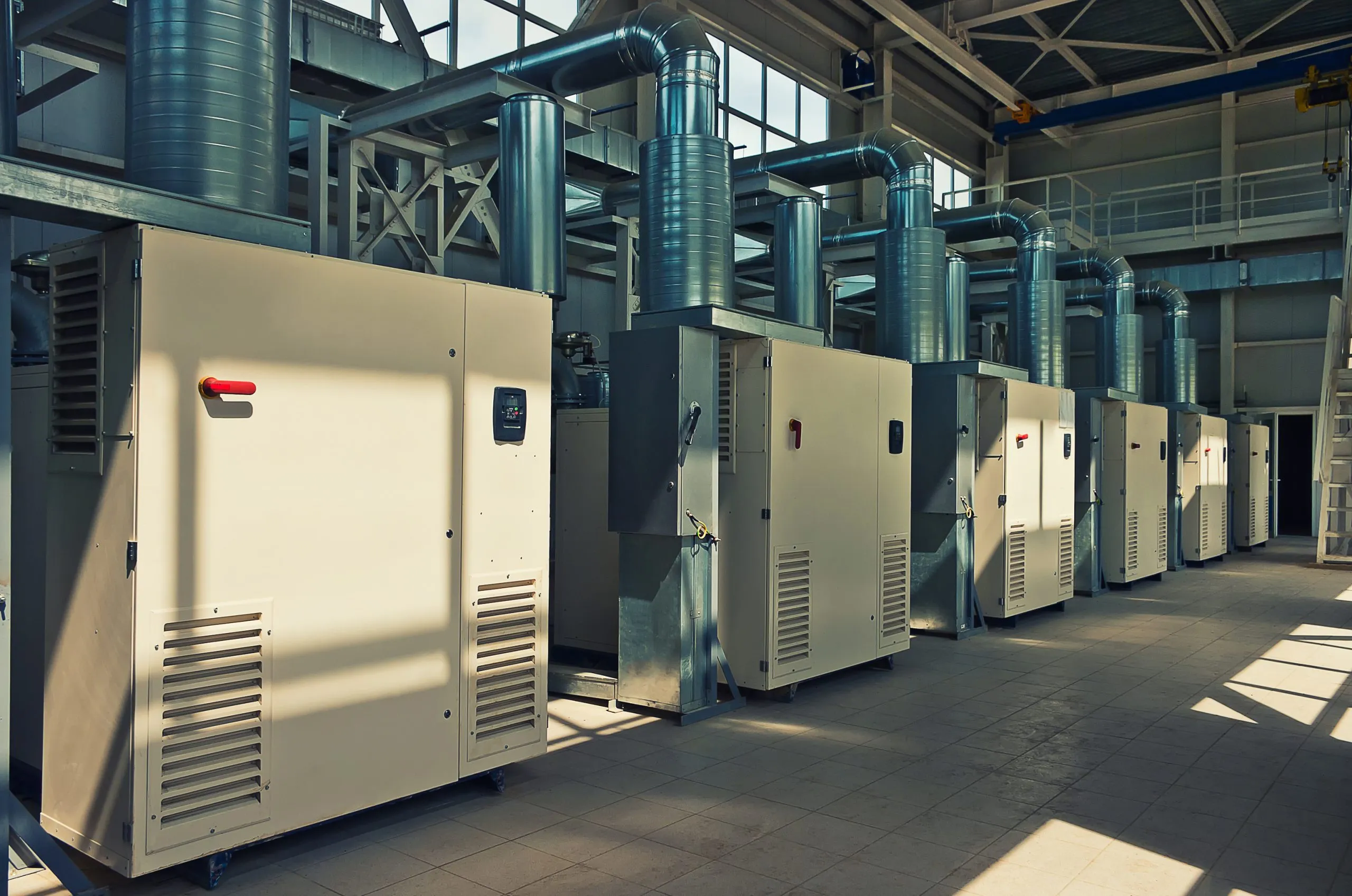
Large-scale liquid oxygen production facilities use internal compression cycles for high-efficiency high-pressure delivery
Frequently Asked Questions
Ready to Find the Right Oxygen Compressor?
Our engineering team is ready to help you select the ideal unit for your application.