
Small Air Compressor for Oxygen Concentrator: Compact Solutions Guide
A small air compressor for oxygen concentrator applications serves two distinct markets: the homecare patient who needs a compact HomeFill unit to fill portable cylinders from their stationary concentrator, and the small-scale industrial or clinical operator who needs a compact, dedicated feed air compressor for a mini PSA oxygen generation system.
In both cases, the size constraint is not just about physical dimensions but also about noise, power consumption, and the ability to install the unit in spaces that were not originally designed for industrial equipment. A bedroom, a nursing station, a small clinic treatment room, or a corner of a laboratory all impose constraints that large industrial compressors cannot meet.
This guide covers the key options in the small air compressor for oxygen concentrator category, the specifications that matter most for compact installations, and the practical considerations for selecting and operating a small compressor in space-constrained environments.
Further Reading: Looking for the best oil-free air compressors for industrial and medical applications? Visit our comprehensive guide at
oil-free-air-compressor.com for expert reviews, specifications, and buying advice on premium oil-free compressor technology.
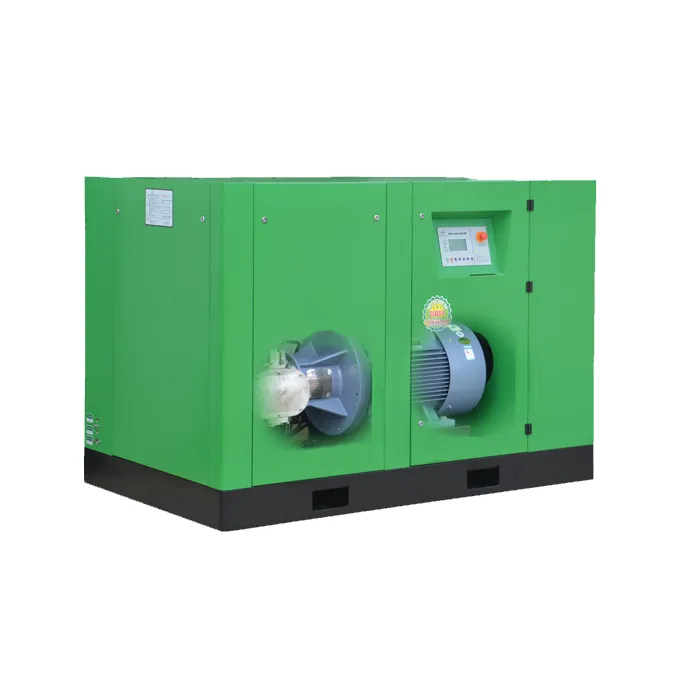
Compact small air compressors for oxygen concentrator systems suit homecare, clinical, and small industrial applications
Compact Compressor Technologies for Small Oxygen Systems
Scroll Compressor
Delivers the quietest operation of any oil-free technology, typically 40 to 48 dB(A). Smooth, pulse-free airflow ideal for sensitive concentrator systems. Compact footprint and low vibration make it suitable for clinical environments.
Oil-Free Piston (Single Cylinder)
The most widely available compact option. Generates slightly more noise than scroll (48 to 58 dB(A)) but lower cost and widely available in a range of flow rates from 20 to 200 LPM. PTFE rings provide oil-free operation.
Linear (Free Piston)
Ultra-low vibration and noise below 40 dB(A) in the best designs. Compact and reliable. Higher unit cost but the preferred choice where noise is the primary constraint, such as patient bedroom installations.
Oil-Free Vane
Compact rotary vane compressors offer smooth airflow and moderate noise levels. Carbon vane replacement is the primary maintenance requirement. Good for clinical installations with regular service access.
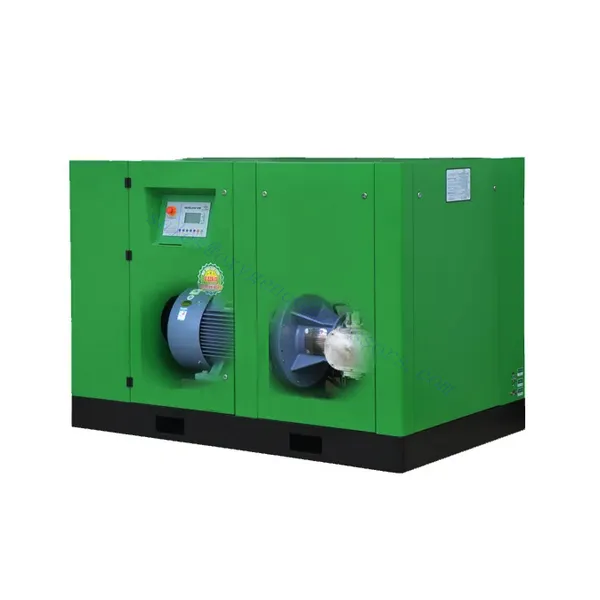
Different compact compressor technologies offer different trade-offs between noise, cost, and maintenance
Specifications That Matter for Small Installations
| Specification | Minimum Requirement | Ideal Target | Why It Matters |
|---|---|---|---|
| Noise level | Below 58 dB(A) | Below 48 dB(A) | Clinical and homecare environments require near-silent operation |
| Weight | Below 25kg | Below 15kg | Single-person relocation within a facility must be possible |
| Footprint | Below 600 x 400 mm | Below 400 x 300 mm | Must fit in existing available space |
| Oil-free certification | Class 1 ISO 8573-1 | Class 0 | Sieve bed protection from oil contamination |
| Pressure dew point | Plus 3 C PDP after dryer | Minus 20 C PDP | Moisture protection for sieve beds |
| Flow rate | Match concentrator demand | 20% above demand | Stability margin for ambient temperature variation |
| Duty cycle rating | 80% minimum | 100% continuous | Continuous operation capability for 24-hour facilities |
| Vibration | Below 2.5 mm/s RMS | Below 1 mm/s RMS | Low vibration protects concentrator valves and sensors |
Installation Tips for Small Oxygen Concentrator Compressors
Choose a Ventilated Location
Even small compressors generate heat during continuous operation. Position the unit with at least 300 mm clearance on all sides and ensure the room has adequate natural or mechanical ventilation to prevent ambient temperature rising above 40 degrees Celsius.
Use Flexible Pipe Connections
Connect the compressor outlet to the concentrator inlet using flexible reinforced hose rather than rigid pipework. This isolates vibration from the compressor and prevents pipework stress from slight misalignment.
Install a Small Buffer Vessel
A 5 to 20-litre buffer vessel between the compressor outlet and the concentrator inlet smooths any pressure fluctuations from the compressor duty cycle and provides a small reserve during momentary demand peaks.
Check Noise with the System Running
Measure the actual noise level with the compressor, concentrator, and any associated equipment running simultaneously before declaring the installation complete. Combined noise from multiple units is higher than individual unit ratings.
Label the System Clearly
Mark all pressure vessels, piping, and connection points clearly with maximum working pressure, gas type (oxygen), and service date. Clear labelling reduces the risk of incorrect connections during servicing.
Frequently Asked Questions
Get Expert Advice Today
Send us your specifications and receive a tailored recommendation within 24 hours.