
Defining the Oxygen Compressor
An oxygen compressor is a mechanical device engineered to increase the pressure of gaseous oxygen, moving it from a lower-pressure source to a higher-pressure destination such as a storage cylinder, a pipeline distribution network, or a pressurised industrial process. The term covers an enormous range of equipment from compact homecare units that fill portable cylinders to multi-megawatt industrial machines compressing thousands of cubic metres of oxygen per hour for steel production.
What sets the oxygen compressor apart from a standard air compressor is not the mechanical principle but the engineering around it. Oxygen at elevated pressures and concentrations is chemically reactive. It dramatically lowers the ignition temperature of materials it contacts. A compressor designed for oxygen service must therefore use only compatible materials throughout its gas path, operate oil-free, and include comprehensive safety instrumentation that a standard air compressor never requires.
This guide explains what an oxygen compressor is, the main types available, the applications they serve, and the key factors that determine which type is right for a given situation.
Further Reading: Looking for the best oil-free air compressors for industrial and medical applications? Visit our comprehensive guide at
oil-free-air-compressor.com for expert reviews, specifications, and buying advice on premium oil-free compressor technology.
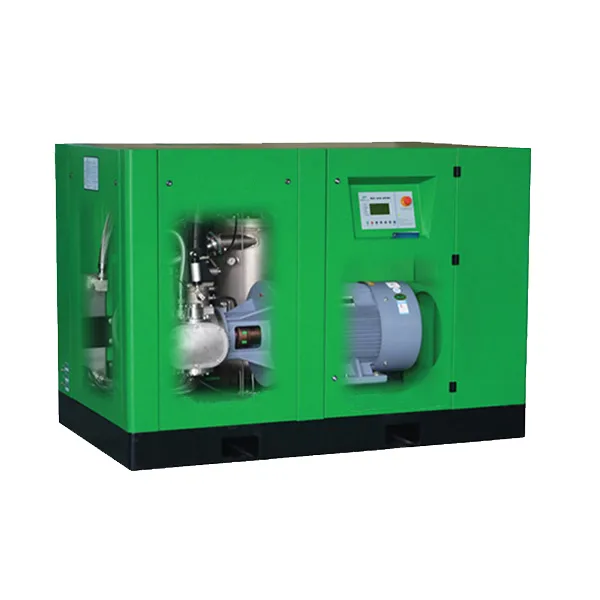
An oxygen compressor raises gas pressure for storage, distribution, and industrial applications
How an Oxygen Compressor Works
The core mechanical function of any oxygen compressor follows the same thermodynamic principles as any gas compressor: a piston, diaphragm, screw element, or impeller reduces the volume of a fixed mass of gas, raising its pressure in accordance with the ideal gas law. What differs is the engineering context surrounding this compression.
Compression Stages
Most oxygen compressors rated above 20 bar use multiple compression stages rather than attempting to achieve the full pressure ratio in a single pass. This is essential because single-stage compression to high pressure generates excessive heat. Each stage compresses the gas by a moderate ratio, and an intercooler between stages removes the heat of compression before the next stage begins. A four-stage compressor raising oxygen from 5 bar to 200 bar might use a compression ratio of approximately 3.5 to 1 per stage.
Oil-Free Operation
Oil-free operation is not optional in oxygen compressors. Hydrocarbon lubricants in contact with high-concentration oxygen under pressure can ignite spontaneously, causing catastrophic fires or explosions. Oil-free oxygen compressors use PTFE piston rings, ceramic cylinder coatings, carbon seals, or non-contact rotor designs to achieve the necessary sealing and wear resistance without any lubricant in the gas path.
Safety Instrumentation
A properly engineered oxygen compressor installation includes temperature sensors at every stage outlet, pressure relief valves sized to handle full compressor output, burst discs rated to the vessel design pressure, oxygen gas detectors in the plant room, and an automated emergency shutdown sequence that triggers safely if any measured parameter exceeds its design limit.
The Five Main Types of Oxygen Compressor
Reciprocating Piston
The most widely used type across all pressure ranges. Uses pistons driven by a crankshaft to compress gas in discrete cylinder volumes. Available in single to five stages for pressures up to 350 bar. Oil-free versions use PTFE or carbon piston rings.
Rotary Screw
Twin intermeshing screw rotors compress gas continuously. Dry screw designs are oil-free in the gas path. Best for moderate pressures (3 to 15 bar) at high flow rates. Low maintenance and excellent efficiency at steady loads.
Scroll
Two interlocking spiral elements compress gas from periphery to centre. Inherently oil-free and very quiet. Ideal for medical and laboratory oxygen concentrator feed applications at pressures up to 10 bar.
Diaphragm
A flexible membrane driven by a hydraulic or mechanical system compresses gas with zero gas-path contamination. Used for highest-purity laboratory oxygen and specialty gas filling. Limited to lower flow rates.
Centrifugal / Turbo
High-speed impellers impart velocity to gas which converts to pressure through a diffuser. Oil-free in the gas path. Used for very large industrial oxygen flows (above 1000 Nm3/h) at moderate pressures.
Types of Applications for Oxygen Compressors
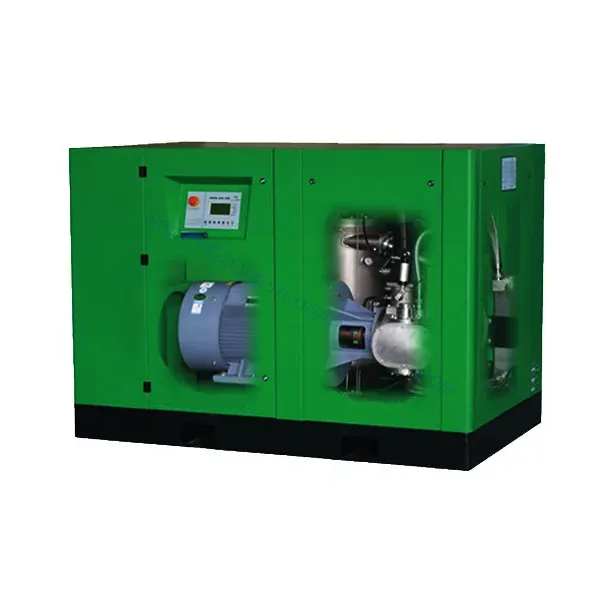
Oxygen compressors serve a wide range of medical, industrial, and environmental applications
| Application | Type Used | Pressure Required | Purity Needed |
|---|---|---|---|
| Home oxygen cylinder filling | Small piston booster | 150 to 200 bar | 90 to 95% |
| Hospital PSA plant | Oil-free screw or piston | 5 to 10 bar | 93 to 95.5% |
| Medical gas cylinder filling | Multi-stage piston | 200 to 300 bar | 99.5% |
| Steel plant oxygen injection | Centrifugal or screw | 3 to 15 bar | 90 to 95% |
| Chemical reactor feed | Multi-stage piston | 20 to 100 bar | 95 to 99.5% |
| Wastewater aeration | Oil-free screw | 3 to 8 bar | 90 to 95% |
| Laboratory and analytical | Diaphragm or scroll | 5 to 50 bar | 99.5%+ |
| Oxy-fuel cutting | Piston booster | 10 to 25 bar | 99.5% |
How to Choose an Oxygen Compressor
Define Outlet Pressure
Identify the target storage or process pressure. This is the most critical specification as it determines the number of compression stages required and whether a standard booster or full high-pressure system is needed.
Determine Flow Rate
Calculate the volume of oxygen you need to compress per hour at normal conditions (0 degrees C, 1 bar). For cylinder filling, this is the number of cylinders per day multiplied by the cylinder volume in Nm3.
Identify Oxygen Source
Know your inlet pressure and oxygen purity. A PSA concentrator outputs 5 to 10 bar at 90 to 95 percent purity. Liquid oxygen evaporators output near atmospheric pressure at 99.5 percent purity. These different starting points require different compressor configurations.
Check Certification Requirements
Medical applications require ISO 7396-1 compliance. European installations need PED certification. Some industries require ATEX certification for hazardous atmospheres. List all applicable standards before specifying.
Evaluate Total Cost of Ownership
Compare specific power consumption (kW per Nm3/h), maintenance intervals, parts cost, and expected service life between competing options. The lowest purchase price rarely delivers the lowest lifetime cost.
Oxygen compressors are safety-critical equipment. Always purchase from manufacturers who provide full material certificates, oxygen-service cleaning records, pressure test certificates, and documentation supporting the certifications claimed for your application. Never use an uncertified or repurposed compressor for oxygen service.
Frequently Asked Questions
Ready to Find the Right Oxygen Compressor?
Our engineering team is ready to help you select the ideal unit for your application.